Are yours real or fake?

Posted by Carolyn on December 11th, 2011

Your Christmas Trees, of course!

I know I’m probably a little late this year for most of you, but here’s something for you to think on for next year. Real or artificial?

You might think artificial is better. The tree looks perfect every year, you can use it for years and years, so in the end it’s cheaper, there’s no needles to clean up and it doesn’t need to be watered. Plus you saved a tree from being cut down so it’s better for the environment, right?

Wrong!

Artificial trees are made out of plastic. So the fact that you can use it year after year also means it will be around for years and years, like hundreds of years. Eventually that artificial tree will end up in a landfill where it will biodegrade at a rate pretty close to zilch.

Another wonderful thing that plastic trees can do for you…off-gas. Have you ever noticed how something new and plastic smells plasticy? That’s because it’s giving off chemicals and you’re breathing them in. We already get enough toxins from other sources, we don’t need to add another.

Real Christmas trees are grown on farms. And sure you’re cutting down a tree, but that tree farmer is going to make sure another tree gets planted in it’s place because that’s their source of income. Plus if you happen to live in Nova Scotia, we have a huge Christmas tree industry and you’d be buying local! Everyone wants to buy local these days.

So what if you already have an artificial tree? Well, if it’s likely to end up in a landfill anyway you might as well do your body a favour and send it there now. There’s not much you can do about the landfill bit after it’s been bought (is there a market for second hand artificial trees?), but at least spare yourself some chemicals.

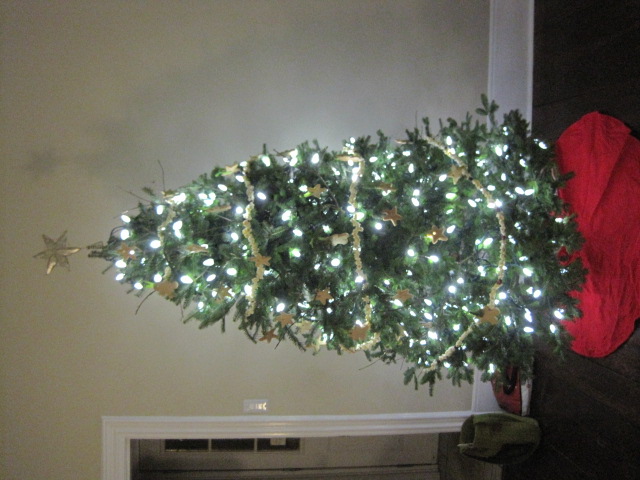
Our very real Christmas tree

We had a fantastic day going to a u-cut and chopping down our own tree. I hope it becomes a yearly tradition, and that you think about starting this tradition too.

PS I know some people are allergic to real trees, but you can always have a fun alternative like a deciduous tree!

Oh Canada, more like Oh, how embarrassing

Posted by Carolyn on December 6th, 2011

There’s a new round of climate talks taking place in South Africa. A bit of a surprise yesterday when China called for a binding agreement. Let’s let that sink in for a mintue.

CHINA.

China wants binding emissions targets. What does Canada want? To stick it’s head in the sand, the Tar Sands to be precise.

Last week’s Quirks and Quarks had a segment on the talks in Durban and a little recap about how we’re all doing with Kyoto. Did you know Canada’s emissions rose by 17% from 1990 levels (the 1990 levels were the baseline for Kyoto, we were actually supposed to decrease from that)? Did you know the US only went up 7%? Yup, we’re worse than the US. We’re basically the worst climate offender in the world.

Overall developed countries actually did decrease their emissions, mostly due to European counties. This was partly due to the economic downturn but Germany seems to be doing OK and also lowering it’s emissions, caused in a large part to government initiatives.

So Canada failed Kyoto and now it’s poo-pooing on the very thought of a new agreement. It’s past whines include “The US isn’t doing it, why do I have to?”. Basically Canada says some of the largest emitters (US, China, Brazil) aren’t covered by Kyoto so it’s useless. Right, because we wouldn’t want Canada to set a progressive example, or do our part to reduce global emission anyway, maybe just because it’s the right thing to do. And now China’s on board and Canada still poo-poos it!

All the Canadian government wants is to work the Tar Sands for all they’re worth and leave the rest of the world with the consequences. We all knew this going into the last elections and yet we still gave Harper a majority government. So shame on Harper for not recognizing what climate change really means, but also shame on Canadian voters for doing the exact same thing. Get informed.

“Fake meat answer to food shortages?”

Posted by Carolyn on August 17th, 2010

That’s more or less the headline of a story that ran yesterday on the CBC news channel.

What? I didn’t know we had food shortages! But after a little searching, well there’s some bad stuff going down in the world.

7 people in Egypt died in a riot of people waiting to get bread.

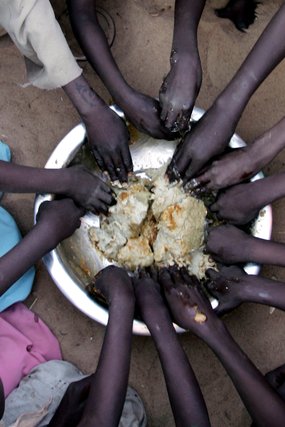
People in Haiti are eating mud to get essential minerals.

Here in Canada wet weather is taking a bite out of crop harvesting in the prairies.

Eep. I didn’t realize things were so bad. There was a day when I couldn’t find spinach in any grocery store in Halifax, but other than that things haven’t really appeared on my radar. However, with extreme weather becoming more and more of a norm, we can only expect more of the same. Prices for food staples are going to continue to rise, especially on the things we eat (or our food eats) all the time, like flour and corn.

Is fake meat really the answer? I had written about fake meat before, but I never thought about this side of the issue. With the technology of growing meat tissue in a laboratory, can we feed the world’s population? Maybe. But do we need to? NO

Like I said, I haven’t noticed a food shortage. I don’t have to resort to standing in line for hours for bread or eating mud to survive. I have a lot of food in my cupboards. It sometimes goes bad and I have to throw it away.

People are eating mud and I’m throwing food away.

This is wrong. Why do I have so much and they don’t have anything? Because I can afford to pay for it? The way we perceive our food in the Western world needs to change. We eat way too much! We’re obese. We join gyms to counteract the very act of eating. We really could get by with eating a lot less as a society. One particular food item we eat too much of is meat. Why would we need to grow more of it in a lab?! North Americans have an extremely high protein diet. Our portions of meat are too big and our frequency of meat consumption is too high. If we start eating only what we need, we wouldn’t need so much food in the first place!

What you can do:

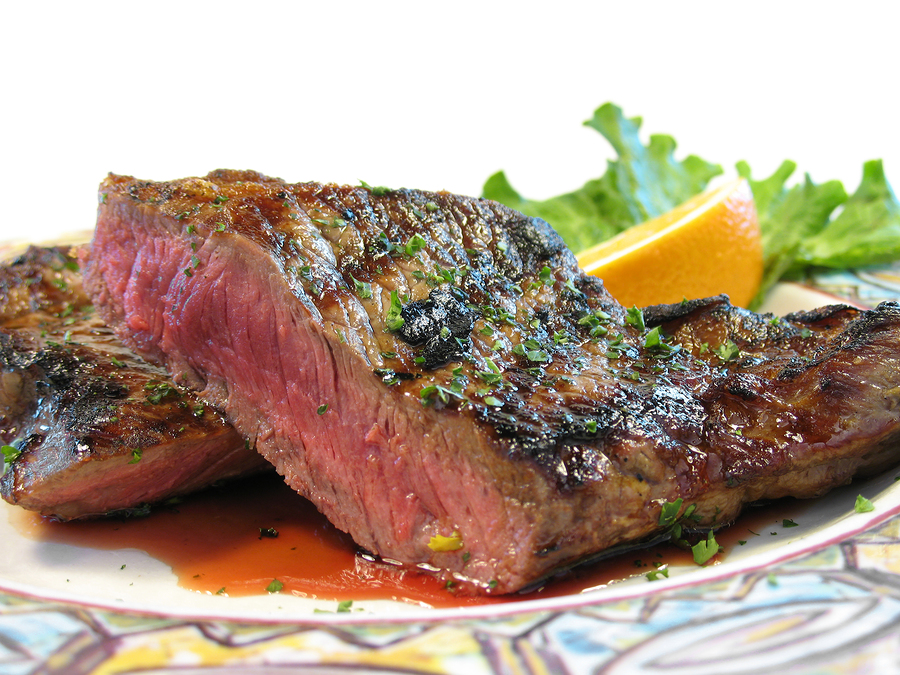
1) Know your portion sizes. One protein serving is about the size of a deck of cards. How big was the last steak you ate?

2) Only buy what you need. Are you always throwing out half a head of lettuce? Make a list of what you want to eat that week and know how much of each item you want to buy. Also, clean out the fridge regularly. That way you remember what’s in there and don’t let it go bad or buy doubles.

3) Think about all the money you’re saving and weight you’re not gaining. Like I’ve said before, it’s hard to care about a riot in Egypt but easy to care about things that hit close to home. So be selfish and do this for yourself!

We need to change the way we perceive food now, before the problems does hit close to home. Growing meat in a lab is not the answer we need right now.

Breaking with Tradition

Posted by Carolyn on July 16th, 2010

There were over 150 000 weddings in Canada last year. That’s everything from sneaking off to city hall to breaking the bank on an all-out traditional bash.

Think about the last traditional wedding you’ve been to. Beautiful flowers for the wedding party, on the tables, on the pews. Toast after toast to the happy couple. So much food you couldn’t possibly finish it.

Those flowers were most likely grown with pesticides and possibly shipped overseas. It was easier to get 150 plastic wine glasses than 150 glass wine glasses.  In the rush to clean up and get home at the end of the night the catering staff skipped sorting out the compostables and all that left over food went with the trash (with the plastic glasses that could have been recycled).

Well, tradition is lovely but you can’t cling to something out of nostalgia when it’s just all-round not good for us or the planet. As an educated, environmentally/socially conscious group of brides-to-be and grooms-to-be we have to do what we know we should but cringe at the thought of: break with tradition.

You might want to start by mentally preparing yourself to deal with the expression on your grandmothers face when she gets her email invitation. I think invitations are an area that can easily be upgraded to planet-friendly, but it possibility one of the hardest. Invitations are the first thing guests experience about a wedding. They set the tone, arriving in a colour that matches the flowers and bridesmaids’ dresses. They’re pretty, customized and give all the info your guests need.

But they use resources. Lots of paper. The invitation. The envelope. The response card. Are all your guests going to recycle it? Lots of postage. Trucks driving the letter to your guests. Trucks driving the response cards back to you.

You can still get all the pretty, all the customization, and all the info to your guests without the tree chopping and exhaust billowing. Email! Websites like Cocodot let you have what looks exactly like your traditional invitation without all the guilt. Beautiful, customized invitations, along with all sorts of other handy features, such as links to registries, wedding websites and guest tracking. When I first saw this website my first thought was “people won’t like getting an email invitation”. But this is the bride and groom’s wedding, not the guests’, and why would they set aside their values for their wedding? If anything this is a chance to embrace your values.

(As an added bonus, it will also most likely cost you less)

150 000 weddings in Canada a year. You could save a lot trees.

***Author’s Note*** I got engaged! In case you couldn’t tell. Don’t worry though, all my posts won’t be about weddings from now on. I’ll try to bring up topics that are applicable to other situations. You can use email invitations for any event; anniversary, birthday, just because. And I’ll still cover some non-wedding issues. Like the BP oil gush being plugged (for now).

This week’s Green Product!

Posted by Carolyn on June 20th, 2010

There’s a stew of claims about the adverse health effects of deodorant. Did you know that Alzheimer’s patients have higher than normal concentrations of aluminum in their brain tissue? Did you know that antiperspirants use aluminum to close your pores so you don’t sweat?

Now, there’s no clear evidence that shows that the aluminum in your brain got there by being absorbed  through your armpits, or that aluminum is a cause of Alzheimer’s, but it makes you think. Plus the mining of aluminum is definitely not a good thing for the environment. There’s also chemical fragrances, formaldehyde (the stuff your frogs were in before you dissected them in grade 11), and talc. Talc was exposed as being illegally mined from an Indian wildlife sanctuary in 2003 and being sold to companiess like Unilever, which owns the Axe and Degree brands.

Guess we’ll just have to stink, right? Wrong!

I started using Crystal Body Deodorant. It’s made from Ammonium Alum, a rock salt. It leaves a salt film on your skin that stops bacteria from growing, and they’re the ones that stink. It’s working for me; I know because I forgot to put it on one day. I recommend re-applying if you put it on in the morning and are going out again at night, it doesn’t seem to last as long as conventional stuff. It was more expensive than conventional sticks as well, but I have a feeling it’s going to last a long time. It seems to get used up slower than a roll-on or a regular stick so I expect it will work out on the plus financially by the time you need to get a new rock.

** This does not stop you from sweating. Just from stinking. **

Thanks to the book Ecoholic by Adria Vasil, where I got my info for this post. It’s a great book for those concerned about what’s going in/on/around their bodies and what every thing they do does to the planet and how to fix it!